
Case studies
European project · Interreg Euro-MED

Carbon Farming Med

The Carbon Farming Med project helps Mediterranean agriculture contribute to the EU climate mitigation framework, by increasing soil carbon storage and reducing emissions at farm level.

Carbon Farming Med · Interreg Euro-MED · Co-funded by the European Union
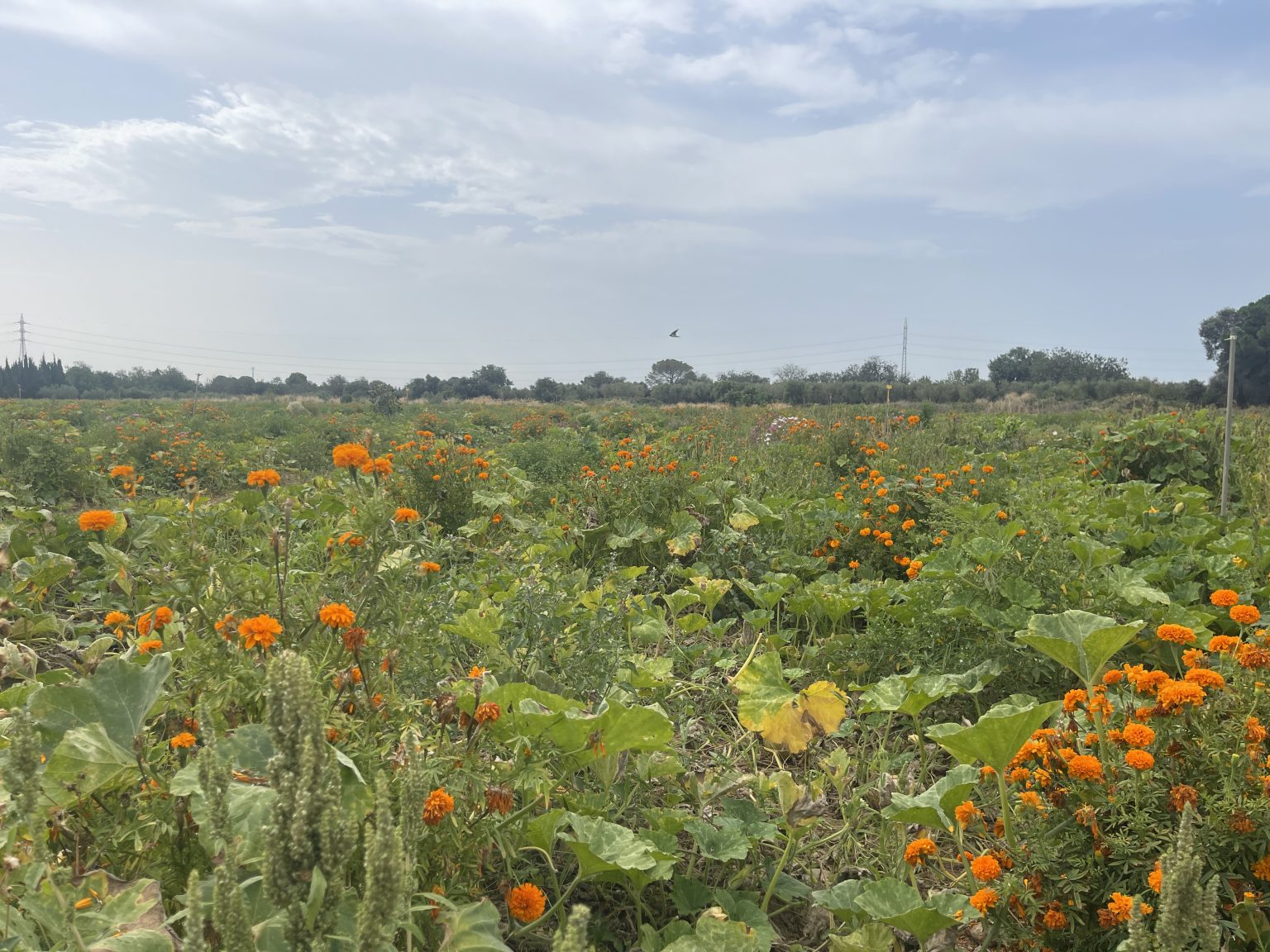
Mediterranean field with flowering companion planting between vegetable rows
Regenerative practices under evaluation in a Mediterranean pilot farm.
Total budget€2,789,472.36
Project duration33 months1 January 2024 – 30 September 2026
Interreg funds€2,231,577.88

The project

This initiative promotes a resilient and sustainable agricultural production system by establishing the first cross-border platform in the Mediterranean region for the buying and selling of carbon credits.

This platform is integral to promoting carbon farming as a viable green business model in the region, facilitating the market adoption of sustainable agricultural practices, and supporting the EU’s climate neutrality goals by enhancing carbon removals.

The Carbon Farming Med project helps Mediterranean agriculture contribute to the EU climate mitigation framework, by increasing soil carbon storage and reducing emissions at farm level. It promotes a resilient and sustainable agricultural production system by enabling farmers to explore carbon farming as a business model that can generate additional revenue where certified results and market conditions allow, optimising regenerative agricultural and agroforestry practices, and utilising the carbon credits market.

Key Objectives of the Project

01

Development of a Carbon Farming Framework

Tailoring strategies to regional conditions to integrate the best regenerative practices. A monitoring, reporting and verification (MRV) system provides the traceable evidence base required to certify results and to give buyers confidence in the units issued.

02

Establishment of a Mediterranean Carbon Credits Market

Initiating the first regional market for trading carbon credits, providing a structured platform for reliable transactions.

03

Creation of a Technological Platform

Developing an IT platform to support the verification processes for carbon credits, facilitating market entry for farmers and transactions between buyers and sellers.

04

Implementation of Best Practices

Adapting and promoting regenerative agricultural techniques to increase soil organic carbon, making carbon farming a viable business for farmers.

These efforts aim to transform agricultural practices, enhancing carbon sequestration and supporting climate goals in the Mediterranean region.

Primary output

The primary output of the Carbon Farming Med project is the creation of the first cross-border platform in the Mediterranean to support the buying and selling of carbon credits. This platform is essential for promoting carbon farming as a viable green business model, facilitating the adoption of sustainable agricultural practices, and supporting the EU’s climate neutrality goals by enhancing carbon removals.

Project partners

Spain

  • Balmes University FoundationUVIC-UCC
  • Azolla Projects

Italy

  • Council for Agricultural Research and EconomicsCREA

Greece

  • Technical University of CreteTUC

France

  • Agrofood Innovation and Technology transfer center SudCRITT IAA Sud
  • Euroregion Pyrenees MediterraneanEPM
  • European Agroforestry FederationEURAF

Slovenia

  • Institute for Health and EnvironmentIHE

Bosnia and Herzegovina

  • Center for Energy, Environment and ResourcesCENER 21

Coordination of the project is led by UVIC-UCC’s Beta Technological Center, ensuring thorough alignment and integration of all project activities.

Azolla Projects’ role in Carbon Farming Med

As part of the CARBON FARMING MED project, we have been actively contributing to the development and implementation of innovative carbon farming solutions across the Mediterranean region. Our work focuses on supporting regenerative agriculture, improving carbon monitoring systems, and facilitating the development of a Mediterranean carbon credits market.

Task 2.1

Selection of Pilot Farms Implementing Regenerative Agricultural and Agroforestry Practices

This activity focused on identifying and selecting pilot farms across different Mediterranean regions to implement regenerative agricultural and agroforestry practices. The selected farms represent diverse climatic conditions, crop systems, and management approaches, allowing the project to test and evaluate sustainable farming practices that enhance soil carbon sequestration, biodiversity, and climate resilience.
Task 3.4

Pilot Phase of the IT Platform

Azolla Projects led the review of the Carbon Farming MED IT platform, working in iterative cycles with the development team and testing it with real field data from the perspective of a developer preparing a Verra VM0042 file. Deliverable D.3.4.1 sets out the findings, separating the adjustments required before the platform can be used in a real certification process from the enhancements that would refine it further, and maps what must change for it to carry a project through to issuance.

Task 3.5

Promotion of a Mediterranean Meeting Point for Carbon Credits

Certified units are only worth generating if a Mediterranean farmer can find someone to buy them, so Activity 3.5 establishes a meeting point between sellers and buyers through partnerships. Azolla Projects authored both deliverables, D.3.5.2 describing the INNO4CFIs marketplace and its certification lifecycle, and D.3.5.1 turning it into a decision framework for food SMEs covering project selection, offsetting against insetting, ESG evidence and the claim limits set by the Empowering Consumers Directive (EU 2024/825).

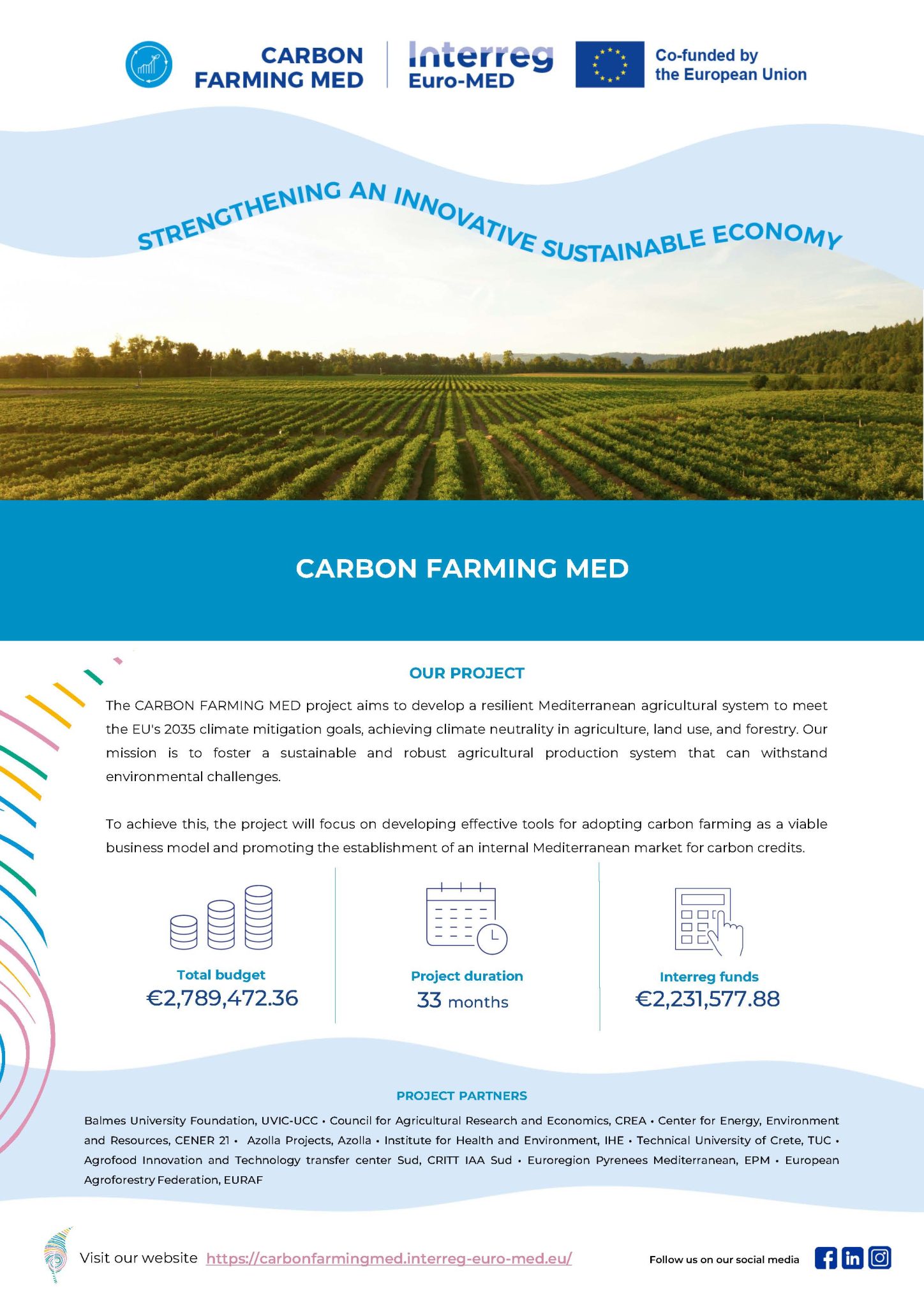
Carbon Farming Med project poster: Strengthening an innovative sustainable economy

Link to the project’s website:

The Carbon Farming Med project is co-funded by the European Union. Project duration: from 1 January 2024 to 30 September 2026.

Carbon Farming Med · Interreg Euro-MED · Co-funded by the European Union